
 Cart is empty
ALLIGATOR
BAGS
HORN LEATHER
ALIGATOR
Crocodile vs. Alligator Leather: Which Exotic Skin Reigns Supreme?
Exotic leather has always been synonymous with luxury and exclusivity. Among the most prized types are crocodile and alligator leather. Though they may appear similar to the untrained eye, they are quite distinct — in origin, texture, quality, and price. This guide breaks down their differences to help you decide which exotic skin best suits your needs.
Origins and Species Differences
Crocodile Species Commonly Used
Crocodile leather is primarily sourced from Nile, Saltwater (Porosus), and Caiman crocodiles. Each has a slightly different texture and scale pattern, with Saltwater crocodiles considered the most premium due to their fine, symmetrical scales.
Alligator Species Used
Alligator leather typically comes from the American Alligator (Alligator mississippiensis), found mainly in the southeastern United States. It is known for its softness, elegance, and smoother scale structure.
Key Biological and Habitat Differences
While crocodiles are found in Africa, Australia, and Asia, alligators are native to North America. Crocodiles tend to grow larger and live in saltwater habitats, while alligators prefer freshwater swamps and rivers.
Appearance and Texture Comparison
Scale Patterns
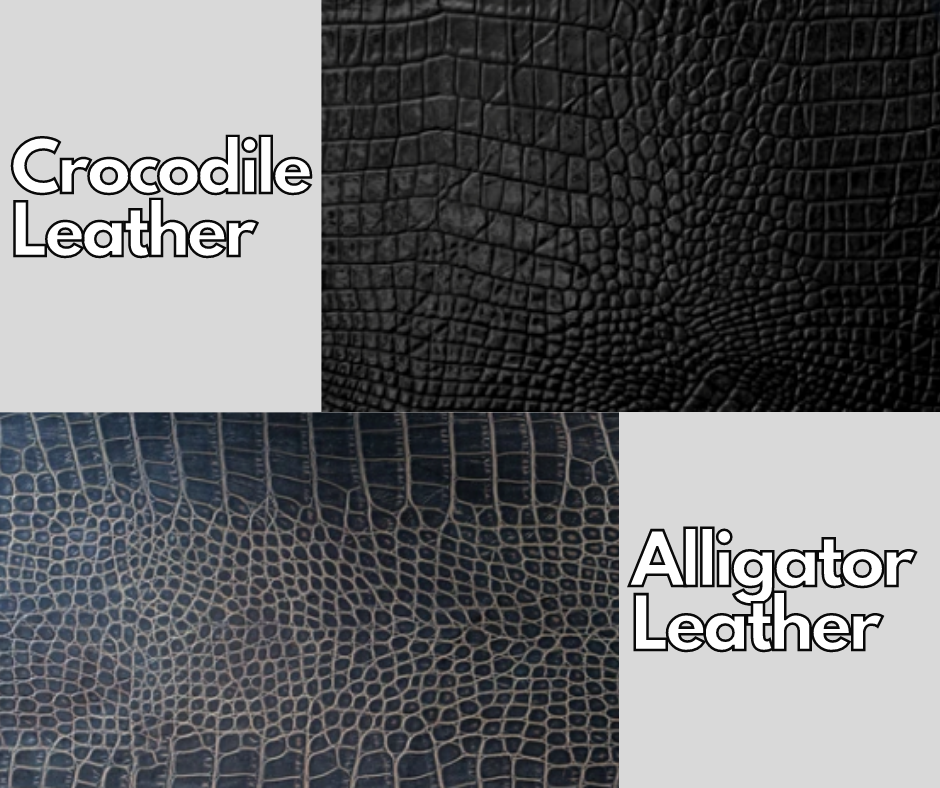
Alligator leather has more uniform, symmetrical scale patterns, which are highly prized in fashion. Crocodile leather, especially from Caiman, may show more irregularity.
Skin Texture
Alligator leather is softer and more pliable, whereas crocodile leather tends to be stiffer but more lustrous. The latter’s natural sheen is often preferred in luxury goods.
Pore Visibility
Crocodile leather shows small pores (sensory pits) in each scale, especially near the edges. Alligator hides lack these pores, making identification easier.
Durability and Performance
Wear Resistance
Both are extremely durable, but crocodile leather generally has a slight edge in hardness, making it ideal for structured accessories like belts and shoes.
Resistance to Scratches, Scuffs, Water
Alligator leather is softer and more prone to scratches but can be conditioned easily. Crocodile leather resists wear better due to its natural toughness.
Aging Over Time
With proper care, both age gracefully, developing a rich patina. Crocodile leather retains its sheen longer, while alligator softens beautifully over time.
Craftsmanship and Leather Processing
Tanning Methods
Both leathers can be chrome or vegetable tanned. Luxury brands often opt for chrome tanning for its smoother finish and color consistency.
Cutting and Usability
Alligator hides are easier to cut and shape, making them ideal for fine detailing. Crocodile leather, especially Porosus, is harder and less forgiving.
Dye Absorption and Finish Quality
Alligator leather absorbs dye more evenly, producing richer and deeper tones. Crocodile leather may have slight color variations due to pore visibility.
Price and Market Value
Cost Per Square Foot
Crocodile leather — especially Porosus — is generally more expensive due to limited availability and higher demand.
Supply Chain and Farming Costs
Crocodiles take longer to farm and require more space, adding to their price. Alligator farming is more developed and slightly more cost-effective.
Investment Value and Rarity
Both offer high resale value, but crocodile leather products tend to be rarer and more collectible.
Ethical and Legal Considerations
CITES Regulations and Conservation
Both crocodile and alligator leather are regulated under CITES to prevent over-harvesting. Legal sourcing is critical to ensure sustainability.
Sustainable Farming Practices
Many farms now follow strict ethical practices, ensuring minimal impact on wild populations and local ecosystems.
Bans and Restrictions by Country/Region
Certain countries, like California, have banned the sale of specific exotic leathers. Always check regional laws before purchasing.
Ideal Use Cases
High-End Fashion
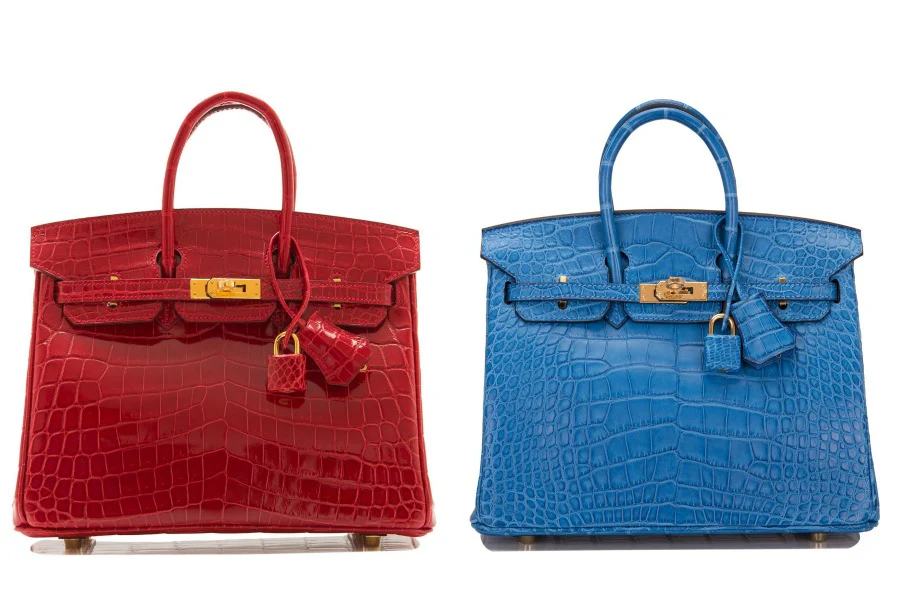
Crocodile leather is ideal for handbags, belts, and wallets, offering a glossier and more structured look. Alligator leather excels in shoes, watch straps, and jackets due to its softness.
Interior Design and Décor
Both are used for luxury furniture trims, but crocodile offers a more dramatic, textured appeal.
Collectibles and Limited Editions
Crocodile leather, due to its rarity and visual appeal, is often reserved for limited-run fashion pieces and horology.
How to Tell the Difference as a Buyer
Visual and Tactile Tests
Look for uniform scale size and lack of pores in alligator. Crocodile scales are slightly irregular with visible dots near the scale edges.
Branding or Certification
Check for CITES tags or authentication cards from luxury brands.
Fake vs. Genuine Leather Indicators
Plastic-like shine, unnatural patterns, and odd smells are red flags. Always buy from reputable sources.
Conclusion: Which One Should You Choose?
If you value softness, uniform pattern, and ease of use — alligator leather is the winner. If you’re after durability, prestige, and dramatic texture — crocodile leather is your go-to. Your final choice should depend on the intended use, budget, and style preference.
FAQs
1. What is the main difference between crocodile and alligator leather?
The key difference lies in the scale pattern, texture, and origin. Alligator leather is softer and more uniform, while crocodile is glossier with visible pores.
2. Why is crocodile leather more expensive than alligator?
Crocodile leather, especially from Porosus, is rarer, harder to farm, and considered more luxurious — making it pricier.
3. Is alligator leather more durable than crocodile leather?
Crocodile leather tends to be more durable due to its density, though both are incredibly long-lasting.
4. Which is better for bags and shoes: alligator or crocodile?
Alligator is better for shoes and soft items; crocodile suits structured bags and accessories.
5. How can I tell if a product is genuine crocodile or alligator leather?
Crocodile skin has visible pores in the scales; alligator skin does not. Certification from sellers also helps.
6. Is using exotic leather ethical and legal?
Yes, if sourced responsibly and certified by CITES. Avoid unlicensed sellers.
7. Which leather has a better texture: crocodile or alligator?
Alligator leather feels smoother; crocodile has a more pronounced texture and sheen.
8. Does crocodile leather age better than alligator?
Crocodile retains its gloss longer, but alligator develops a softer, more vintage feel.
9. What luxury brands use crocodile vs. alligator leather?
Brands like Hermès, Gucci, and Rolex use both, depending on the product’s design and intent.
10. Is it worth investing in exotic leather accessories?
Absolutely. These leathers offer timeless appeal, rarity, and lasting value when well cared for.
A wonderful serenity has taken possession of my entire soul, like these sweet mornings of spring which I enjoy with my whole heart. I am alone, and feel the charm of existence in this spot, which was created for the bliss of souls like mine. I am so happy.
my dear friend, so absorbed in the exquisite sense of mere tranquil existence, that I neglect my talents.
I feel that I never was a greater artist than now. When, while the lovely valley teems with vapour around me, and the meridian sun strikes the upper surface of the impenetrable foliage of my trees, and but a few stray gleams steal into the inner sanctuary.
A wonderful serenity has taken possession of my entire soul, like these sweet mornings of spring which I enjoy with my whole heart. I am alone, and feel the charm of existence in this spot, which was created for the bliss of souls like mine. I am so happy.
my dear friend, so absorbed in the exquisite sense of mere tranquil existence, that I neglect my talents.
I feel that I never was a greater artist than now. When, while the lovely valley teems with vapour around me, and the meridian sun strikes the upper surface of the impenetrable foliage of my trees, and but a few stray gleams steal into the inner sanctuary.