From ancient traditions to modern luxury fashion, leather crafting has stood the test of time as one of the most skill-intensive and expressive art forms. At IsItLeather.com, we celebrate the mastery behind each stitch, cut, and polish that transforms rawhide into timeless creations. Let’s take a journey through the fascinating world of leatherwork.
The Origins of Leather Crafting
Leather was among the first materials used by early humans for tools, garments, and shelter. With time, leather crafting evolved across cultures—from the ornate saddles of Central Asia to the refined bookbinding practices in Renaissance Europe. Today, luxury brands still rely on age-old methods to create heirloom-quality goods.
Want to explore how leather types differ? Check out our comparison: Crocodile vs. Alligator Leather
From Hide to Heritage: The Leathermaking Process
1. Hide Selection & Preparation
The process begins with sourcing full-grain hides—the highest quality of leather. After dehairing and cleaning, the hide is ready for tanning.
2. Tanning Techniques
Vegetable tanning: An eco-conscious method that uses tree bark and takes weeks.
Chrome tanning: A faster, chemical-based process that results in soft, flexible leather.
Both methods have their place depending on the final use—think structured belts versus soft handbags.
3. Shaping & Tooling
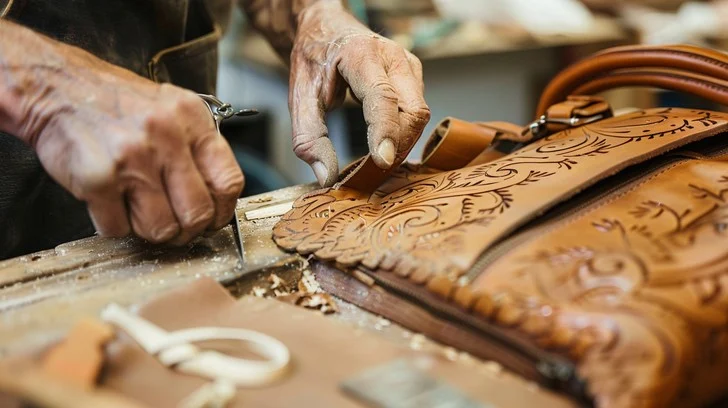
Leather is dampened and formed into desired shapes. Artisans then use tools like swivel knives and stamping sets to create intricate designs, a process called tooling.
Fun Fact: Tooling only works well on vegetable-tanned leather due to its rigidity and porosity.
4. Dyeing & Painting
Leather can be colored with water- or alcohol-based dyes for deep, lasting hues. Alternatively, acrylic paints are applied for surface color effects.
Stitching & Edge Finishing
Edges are burnished with bone or wood tools to create a smooth, finished feel. Hand-stitching—using techniques like the saddle stitch—offers superior strength and aesthetic value. Machine stitching is also used in larger-scale production but lacks the artisanal touch.
Tools of the Leather Artisan
| Tool | Function |
|---|
| Swivel Knife | Cuts curves for carving |
| Edge Beveler | Rounds off sharp leather edges |
| Mallet | Drives stamps into the leather |
| Stitching Awl | Creates holes for sewing |
| Burnisher | Polishes leather edges |
New to leathercraft? We recommend starting with a basic leather tooling kit for beginners.
The Finishing Touches
Once dyed and stitched, the leather is sealed with waxes, oils, or acrylic finishes. This adds water resistance and enhances the patina—a natural sheen that develops over time. At this stage, logos, initials, or brand stamps are often added for personalization.
For examples of finely finished leather pieces, browse our handmade leather goods collection.
Sustainability in Leathercraft
Sustainability is becoming central to the craft. Brands and artisans are embracing:
Vegetable tanning over chrome for environmental safety.
Upcycling leather scraps into smaller items.
Transparent sourcing from ethical tanneries.
Explore more in our guide: Is Leather Sustainable?
Getting Started with Leathercraft
If you’re inspired to begin leatherworking, here’s what you need:
A basic tool set (knife, mallet, burnisher, awl)
Veg-tan leather pieces
A workspace with good ventilation
Free video tutorials and patterns are available on YouTube and communities like Leatherworker.net.
Final Thoughts
Leathermaking is more than just crafting—it’s storytelling through texture, tone, and time-honored technique. Whether you’re investing in a luxury piece or trying your hand at carving, you’re participating in a tradition that spans generations.
Related Reads:
FAQs
Q: Is leathercraft hard to learn?
A: It takes practice, but many beginners start with small projects like wallets or belts using simple tools.
Q: What leather is best for beginners?
A: Vegetable-tanned leather is the easiest to work with for tooling and dyeing.
Q: How long does it take to make a leather wallet?
A: A hand-stitched wallet can take 3–6 hours depending on design complexity.

 Cart is empty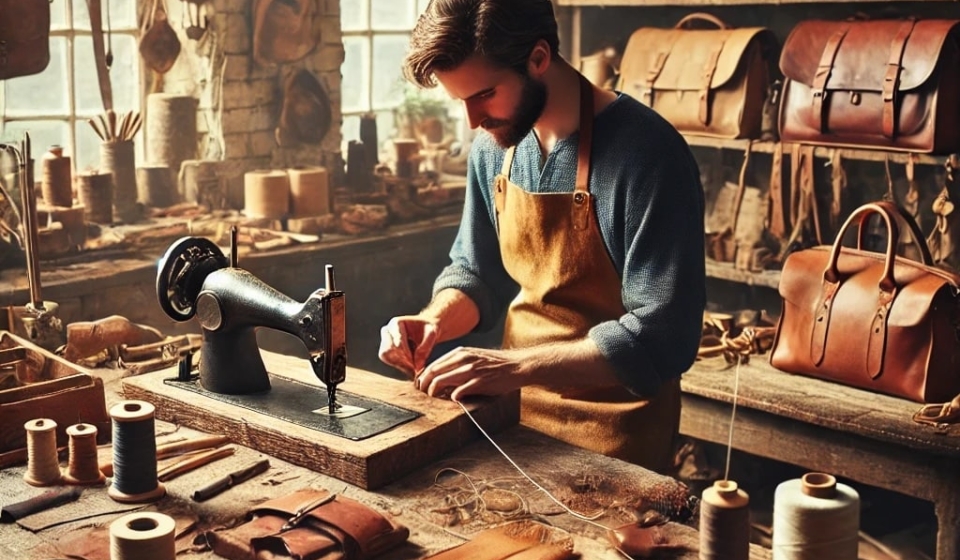
Add a Comment